

Wastewater
ETP vs STP vs CETP: Which Wastewater Plant Do You Actually Need?
Three acronyms, three very different jobs. Here is what each plant treats, how it works and how to tell which one your site requires.
- Plain-language definitions
- Side-by-side comparison
- Decision steps
The short answer: it depends on where the wastewater comes from
An STP (sewage treatment plant) treats domestic sewage from toilets, bathrooms and kitchens. An ETP (effluent treatment plant) treats wastewater produced by an industrial process. A CETP (common effluent treatment plant) is a shared ETP that serves a cluster of industries, usually small and medium units in an industrial area that could not each run a full plant economically.
The distinction matters because the pollutants are different. Sewage is fairly predictable and mostly organic, so biological treatment works well. Industrial effluent can carry acids, alkalis, oil, dyes, heavy metals, solvents or high dissolved salts, and its quality changes with the product being made. Using the wrong design, or sending industrial effluent into an STP, leads to failed discharge tests and plant upsets.
Below we compare the three side by side, explain where they overlap, and set out the questions to ask before you request a proposal.
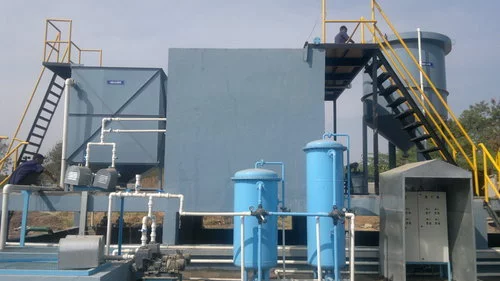
ETP vs STP vs CETP at a glance
A general comparison. Every project is designed around its own wastewater analysis and the consent conditions issued by the State Pollution Control Board.
| Aspect | STP | ETP | CETP |
|---|---|---|---|
| Treats | Domestic sewage | Industrial process effluent | Combined effluent from many industries |
| Typical users | Housing, offices, hotels, hospitals, schools | Individual factories and process units | Industrial estates and clusters |
| Key pollutants | BOD, COD, suspended solids, nutrients, pathogens | Varies: pH, oil and grease, colour, metals, TDS, toxic organics | Mixed; members pre-treat to agreed inlet limits |
| Main process | Mainly biological plus filtration and disinfection | Physico-chemical plus biological plus tertiary, as needed | Large-scale ETP with equalisation, primary, biological and tertiary stages |
| Variability of inflow | Low to moderate, daily peaks | Often high, changes with production | High; depends on member industries |
| Ownership | Building owner or society | The industry itself | Usually a cluster association or special purpose body |
| Treated water reuse | Flushing, gardening, cooling make-up | Process reuse, washing; ZLD in some sectors | Discharge or reuse as permitted |
What each plant is designed to do
Sewage treatment plant (STP)
Removes organic load and solids from domestic sewage using processes such as MBBR, SBR or MBR, then filters and disinfects for safe discharge or reuse. Learn more.
Effluent treatment plant (ETP)
Built around one industry's effluent. Stages may include oil removal, neutralisation, coagulation, settling, biological treatment and tertiary polishing. Learn more.
Common effluent treatment plant (CETP)
Pools effluent from many small units in an industrial area into one professionally run facility, sharing capital and operating costs. Learn more.
Why industrial effluent cannot simply go to an STP
STPs rely on a healthy population of bacteria. Industrial effluent can contain substances that are toxic to those bacteria, such as heavy metals, strong acids or alkalis, disinfectants, solvents or very high salt levels. Even a few hours of such inflow can kill the biomass and take weeks to recover.
That is why an ETP usually starts with physico-chemical steps: screening, oil and grease removal, equalisation, pH neutralisation and chemical coagulation to remove metals and colour. Biological treatment follows only once the effluent is safe for bacteria. Some sectors with high dissolved solids add RO and evaporators to recover water and move towards zero liquid discharge.
- Effluent analysis comes first: pH, COD, BOD, TSS, oil and grease, TDS and sector-specific parameters
- Treatability tests help select chemicals and doses
- Equalisation evens out batch discharges from production
- Sludge from ETPs may be classed as hazardous and must be handled as per rules
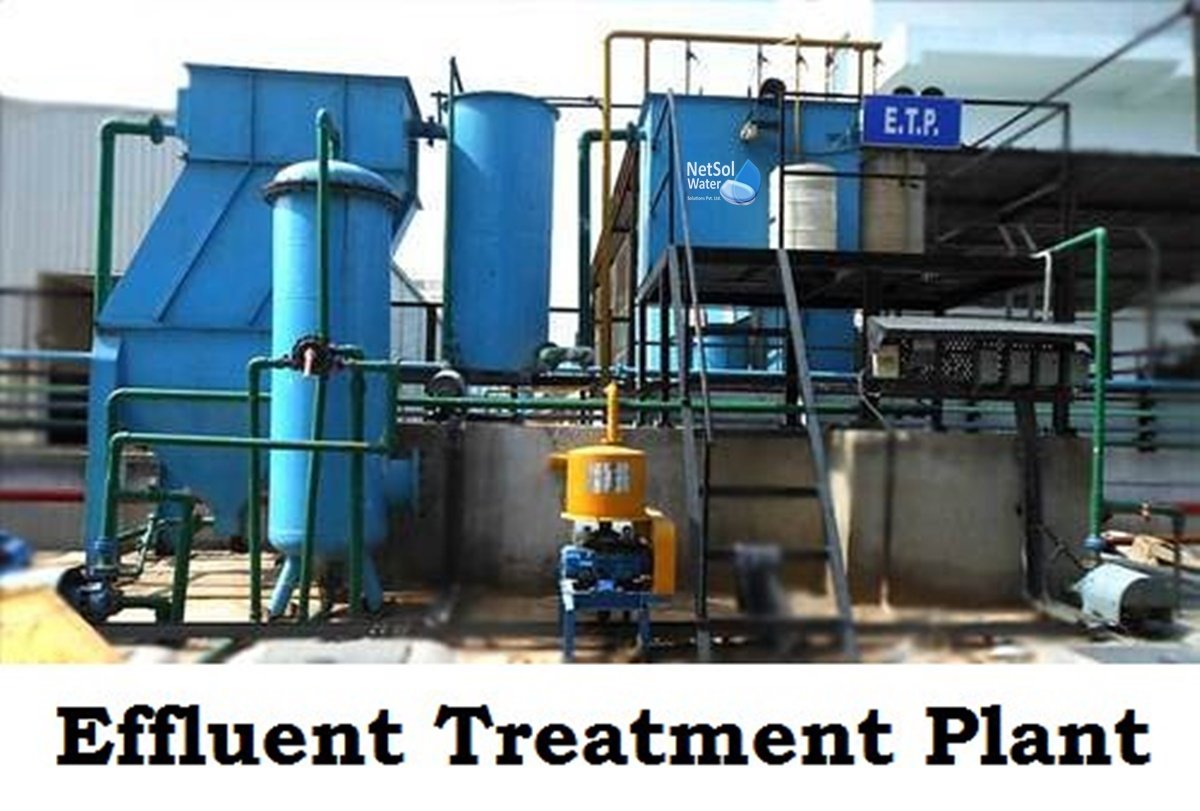
When you need both an ETP and an STP
Most factories generate two kinds of wastewater: process effluent from production, and domestic sewage from toilets, canteens and washrooms used by staff. These are commonly treated in separate streams, an ETP for process effluent and a small STP for sewage, because their characteristics and treatment needs are so different. Where the effluent is mild and biodegradable, a combined design may be possible after evaluation.
Hospitals are another common case. Sewage from wards and staff areas goes to an STP, while laboratory, laundry and certain clinical wastewater may need a dedicated ETP with disinfection. See our pages on hospital STPs and hospital ETPs.
- Factory: process ETP plus domestic STP is the usual arrangement
- Hospital: STP for sewage, ETP for lab and laundry streams where required
- Unit in an industrial estate: may pre-treat on site and send to a CETP
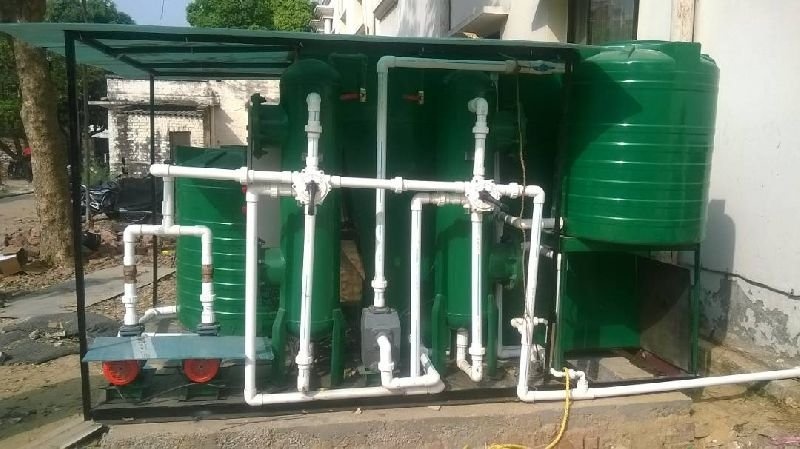
How to work out which plant your site needs
These steps apply whether you are planning a new project or responding to a pollution control board observation.
Map every wastewater source
List all drains: toilets, kitchens, process lines, washing, cooling tower blowdown, boiler blowdown, labs and floor washing, with approximate daily volumes.
Get the wastewater tested
Have representative samples analysed at a recognised laboratory. Industrial effluent needs sector-specific parameters, not just BOD and COD.
Check your consent conditions
Your Consent to Establish or Operate from the SPCB specifies how effluent and sewage must be handled. Check whether a CETP connection is available or required.
Decide on segregation
Keep strong or toxic process streams separate from sewage. Segregation usually makes treatment cheaper and more reliable.
Size and select the process
With flows and analysis in hand, an engineer can size the STP, ETP or pre-treatment unit and propose technology, layout and running costs.
FAQs: ETP vs STP vs CETP: What Is the Difference?
Straight answers to what clients ask us most. Can't find yours? Ask us directly.
Still have a question?
Talk to an engineer: +91 90734 97917 or WhatsApp us. You can also email contact@bjc-global.com.
Is an ETP the same as a wastewater treatment plant?
An ETP is one type of wastewater treatment plant. 'Wastewater treatment plant' is a broad term covering STPs, ETPs, CETPs and municipal plants. An ETP specifically treats industrial process effluent, and its design depends on the industry, so a textile ETP looks very different from a food-processing or electroplating ETP.
Does a small factory need its own ETP if there is a CETP nearby?
It depends on your consent conditions and the CETP's membership rules. Many CETPs require member units to pre-treat effluent to agreed inlet limits, for example neutralising pH or removing oil and metals, before sending it. Some units then need only a compact pre-treatment system rather than a full ETP. Your SPCB consent and the CETP operator will confirm what applies.
Can domestic sewage and industrial effluent be treated together?
Sometimes, but only after evaluation. If the process effluent is biodegradable and free of toxic substances, a combined biological plant may work. Where effluent contains metals, high salts, solvents or extreme pH, separate treatment is safer. Most factories keep the streams separate, which makes each plant simpler, more stable and easier to keep within discharge norms.
What tests are needed to design an ETP?
At minimum, pH, COD, BOD, total suspended solids, total dissolved solids and oil and grease. Depending on the industry, add colour, heavy metals, phenols, cyanide, ammonia, sulphides or specific organics. Composite samples over a full production cycle give a truer picture than a single grab sample, because industrial effluent often varies by hour and by product.
Who operates a CETP?
CETPs are usually set up and managed by an association, society or special purpose company formed by the member industries, sometimes with government support. Members pay charges based on the volume and strength of effluent they send. Day-to-day operation is often contracted to a specialist operator under the oversight of the managing body and the pollution control board.
Does BJC Global build STPs, ETPs and CETPs?
Yes. BJC Global designs, fabricates, installs, commissions and maintains STPs and ETPs from 5 KLD to 100 MLD, and supports CETP projects for industrial clusters. We start with your wastewater sources and test results, recommend the right configuration, and can take on the AMC after commissioning so the plant keeps meeting applicable CPCB/SPCB norms.
Keep reading
Effluent Treatment Plant
Effluent treatment plant design and build in Gurugram: treatability study, primary to tertiary stages, sludge handling…
Read more
WastewaterSewage Treatment Plant
Sewage treatment plant design, installation, upgrades and AMC in Gurugram and Delhi NCR. New STPs, retrofits and…
Read more
WastewaterCommon Effluent Treatment Plant (CETP)
Common effluent treatment plants for industrial clusters and estates: inlet norms, design, build and O&M support from…
Read more
WastewaterETP Plant
Industrial ETP plants in Gurugram for textile, pharma, food, dairy, automobile and chemical units, built for your…
Read more
Find out exactly which plant your site needs
Share your wastewater sources, volumes and any test reports. BJC Global will recommend STP, ETP or pre-treatment for CETP connection. Book a free site visit in Delhi NCR or get a free quote.