

Water Treatment
How to Choose an Industrial RO Plant: TDS, Recovery, Membranes and Sizing
An RO plant is only as good as the water analysis and design behind it. Use this guide to ask the right questions before comparing quotes.
- Start with a water report
- Sizing worked example
- Free LPH calculator
Why two RO quotes with the same LPH can be very different plants
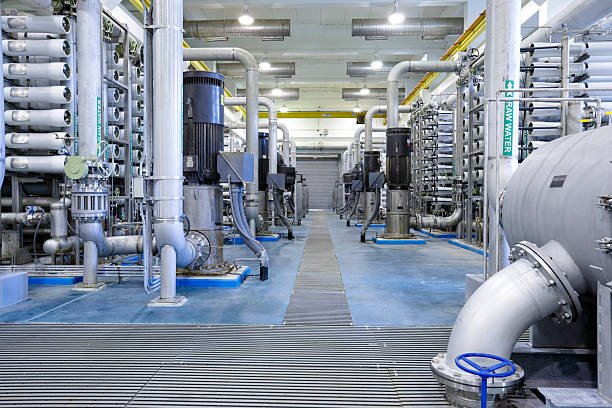
Reverse osmosis pushes water through a semi-permeable membrane under pressure, leaving most dissolved salts, hardness and many contaminants behind in a reject stream. On paper, a 5,000 LPH RO plant from one supplier looks identical to another. In practice, the number and type of membranes, the pre-treatment, the pump, the recovery setting and the instrumentation can differ widely, and those differences decide how long membranes last and what you spend on power and chemicals.
The right plant starts with a raw water analysis, not a catalogue model. Groundwater in parts of Haryana and Rajasthan, for example, can carry high TDS and hardness, while some borewell sources carry iron. Each needs a different pre-treatment and recovery strategy.
This guide covers the decisions that matter, from feed TDS to reject handling, with a sizing example and a calculator. For capacity ranges and configurations, see our industrial RO plant page.
Start with feed water TDS and quality
Feed TDS largely decides membrane type, operating pressure and achievable recovery. The bands below are indicative; the full analysis, including hardness, silica, iron and SDI, refines the design.
| Feed water | Typical TDS | Design implications |
|---|---|---|
| Municipal or low-TDS borewell | Up to about 500 mg/L | Low-energy brackish membranes; often high recovery possible |
| Moderate brackish borewell | About 500–2,000 mg/L | Standard brackish water membranes; antiscalant essential |
| High-TDS brackish water | About 2,000–10,000 mg/L | Higher pressure; recovery limited by scaling; careful staging |
| Seawater or very saline water | Above about 10,000 mg/L | Seawater membranes, high-pressure pumps, energy recovery worth considering |
| Treated wastewater (STP/ETP) | Varies widely | Fouling-resistant membranes; UF or MBR pre-treatment strongly advised |
Pre-treatment: the part that protects your membranes
Most premature membrane failures trace back to inadequate pre-treatment. A typical industrial RO train includes several of these stages, chosen from the water analysis.
Multimedia or sand filter
Removes suspended solids and turbidity. Backwashed periodically. Sized on flow velocity so it actually filters rather than channels.
Activated carbon filter
Removes free chlorine and some organics. Polyamide RO membranes are damaged by chlorine, so this or SMBS dosing is essential with chlorinated feed.
Softener or iron removal
Used where hardness or iron is high. Iron and manganese foul membranes quickly and must be removed or kept in solution.
Antiscalant dosing
A dosing pump adds antiscalant to prevent calcium carbonate, sulphate and silica scaling as salts concentrate in the reject side.
Micron cartridge filter
A final safety barrier, typically 5 micron, before the high-pressure pump. Rising pressure drop signals it is time to change cartridges.
Ultrafiltration
Recommended for surface water and treated wastewater. Delivers consistently low SDI feed, extending membrane cleaning intervals.
Recovery, membranes and reject: the trade-offs
Recovery is the share of feed water that becomes permeate. Brackish water plants commonly operate somewhere around 50% to 75%, depending on feed chemistry; seawater plants much lower. Pushing recovery higher saves raw water but concentrates salts in the reject, increasing scaling risk. The safe limit comes from a membrane projection using your actual analysis, not a fixed rule.
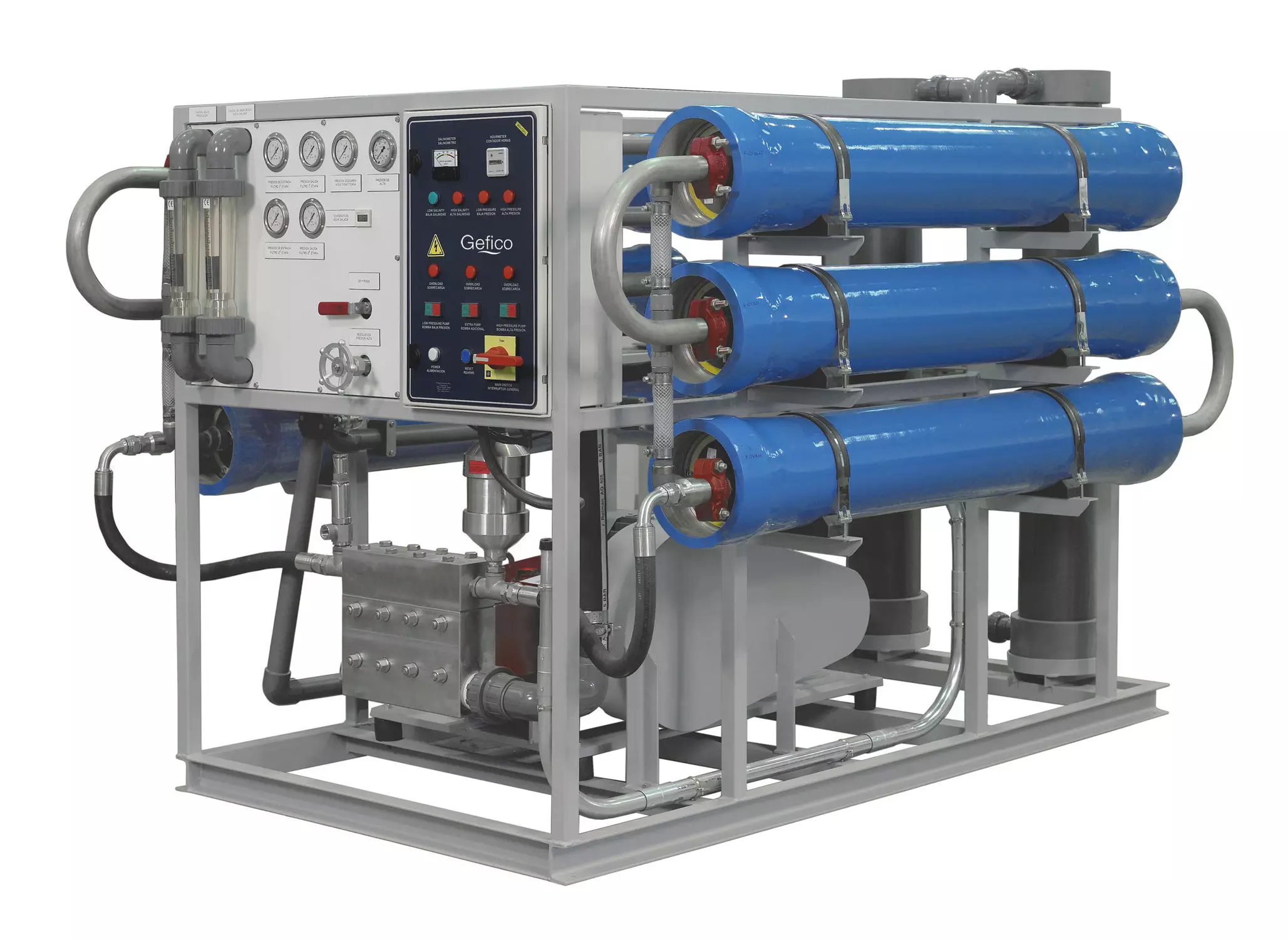
Membranes come in 4-inch elements for smaller plants and 8-inch elements for larger ones, in low-energy, standard brackish, fouling-resistant and seawater grades. Housings are usually FRP pressure vessels. Ask for the projection report showing flux, pressure and permeate quality; it is the clearest way to compare suppliers.
Reject must go somewhere. Options include blending for gardening where quality allows, use in toilet flushing or floor washing, solar evaporation ponds, or a reject RO followed by evaporators as part of zero liquid discharge (ZLD) where consent conditions require it.
- Ask for the membrane projection report with every quote
- Check flux is conservative for your water source
- Confirm a clean-in-place (CIP) system is included
- Plan reject disposal before finalising recovery
Sizing in LPH: a worked example
Assume a factory needs 40 KLD of treated water per day for process and boiler feed, operating the RO for 20 hours, with feed TDS around 1,500 mg/L. Figures are illustrative.
| Step | Calculation | Result |
|---|---|---|
| Daily permeate demand | Process plus boiler feed | 40,000 L/day |
| Hourly permeate needed | 40,000 ÷ 20 hours | 2,000 LPH |
| Add margin for growth and cleaning downtime | 2,000 × about 1.2 | Select a 2,500 LPH plant |
| Feed flow at 70% recovery | 2,500 ÷ 0.70 | About 3,570 LPH feed |
| Reject flow | 3,570 − 2,500 | About 1,070 LPH reject to manage |
| Storage | Treated water tank | Several hours of demand to buffer peaks |
RO capacity calculator
How big should your RO plant be?
Enter how much treated water you need each day and how many hours the plant can run.
Indicative only. Feed water TDS, temperature and pre-treatment change the final design.
Get a quote for this sizeA step-by-step buying checklist
Follow these steps to compare quotes on equal terms.
Test your raw water
Get a full analysis: TDS, hardness, alkalinity, silica, iron, manganese, chlorides, sulphates, pH, turbidity and, ideally, SDI. Test in different seasons if possible.
Define output quality and quantity
State permeate TDS and other limits needed for your use, such as boiler feed, process water or drinking, and the daily demand and operating hours.
Review design and projection
Compare membrane make and grade, number of elements, recovery, flux, feed pressure and pre-treatment stages, not only the LPH figure.
Check controls and instrumentation
Look for conductivity meters, flow meters, pressure gauges, low and high pressure trips, tank level controls and a CIP arrangement.
Plan reject, AMC and spares
Agree reject disposal, chemical supply, cartridge and membrane spares, operator training and an AMC before ordering.
FAQs: How to Choose an Industrial RO Plant: A Buyer's Guide
Straight answers to what clients ask us most. Can't find yours? Ask us directly.
Still have a question?
Talk to an engineer: +91 90734 97917 or WhatsApp us. You can also email contact@bjc-global.com.
What size RO plant do I need for my factory?
Divide your daily treated water requirement by the hours the plant will run, then add a margin. For example, 40,000 litres a day over 20 hours needs 2,000 LPH, so a 2,500 LPH plant allows for growth and cleaning downtime. Remember feed and reject flows are higher than permeate, so your raw water source and drainage must cope too.
What recovery should an industrial RO plant run at?
For brackish water, recovery is typically somewhere between 50% and 75%, set by feed hardness, silica and other scaling ions rather than by preference. Higher recovery saves water but increases scaling risk and cleaning frequency. A membrane projection using your actual water analysis is the right way to set it, and antiscalant dosing helps reach the upper end safely.
Why do RO membranes fail early?
The most common causes are scaling from inadequate antiscalant dosing or excessive recovery, fouling from poor pre-treatment, chlorine damage when carbon filters or SMBS dosing are neglected, and iron or organic fouling. Irregular cleaning and running the plant outside design pressure also shorten life. Good pre-treatment, logged readings and timely CIP typically keep membranes working for several years.
Can RO reject water be reused?
Often, partly. Depending on its TDS, reject can be used for floor washing, toilet flushing, dust suppression or blended for gardening where soil and plants tolerate it. In industries with zero liquid discharge conditions, reject goes to a second RO stage and then evaporators or crystallisers. The best option depends on volume, quality and your consent conditions.
What is antiscalant and is it really necessary?
Antiscalant is a chemical dosed in small quantities before the RO to stop dissolved salts such as calcium carbonate, calcium sulphate and silica from crystallising on the membranes as they concentrate. For almost all borewell and brackish sources it is necessary. The product and dose should be selected using the water analysis and projection software, then checked periodically.
Should I choose 4-inch or 8-inch membranes?
Smaller plants, roughly up to a few thousand LPH, often use 4-inch elements because they suit lower flows and are easy to handle. Larger industrial plants typically use 8-inch elements, which offer more membrane area per vessel and lower cost per litre. The choice is made during design based on flow, number of stages and flux limits.
Does BJC Global provide AMC for RO plants?
Yes. BJC Global offers AMC for RO plants it builds and, after inspection, for many existing plants. AMC typically includes scheduled visits, performance checks, membrane cleaning, cartridge replacement, dosing pump servicing and guidance on chemicals and spares. We can also train your operator to log daily readings so problems are caught early.
Keep reading
Industrial RO Plant Manufacturers
Industrial RO plants from 50 to 5,00,000 LPH for boiler feed, process and utility water. Engineered to your feed water…
Read more
Water treatmentRO Plant
Commercial RO plants (250–5,000 LPH) for offices, schools, hotels and hospitals in Gurugram, sized to your water…
Read more
Water treatmentRO Water Plant Suppliers
Packaged RO water plants supplied, installed and serviced with spares, membrane replacement and AMC across Gurugram and…
Read more
Water treatmentWater Softening Plant
Ion exchange water softening plants that stop scale in boilers, geysers and pipes, sized to your hardness test by BJC…
Read more
Send your water report for a sized RO proposal
Share your raw water analysis, daily demand and operating hours. A BJC Global engineer will propose pre-treatment, recovery and membrane configuration. In Delhi NCR, we can arrange a water test.