

Wastewater
How to Size a Sewage Treatment Plant: A KLD Guide with Worked Examples
Get your STP capacity right before you ask for quotes. Here is the method engineers use, the Indian norms behind it, and two examples you can adapt.
- Based on CPHEEO/NBC norms
- Two worked examples
- Free sizing calculator
Why STP sizing matters more than the technology you pick
The single most expensive mistake in a sewage treatment plant is getting the capacity wrong. An undersized plant runs overloaded, smells, fails discharge tests and needs a costly retrofit. An oversized plant wastes capital, consumes more power than it should and can struggle to keep its biology healthy because the load is too thin.
Capacity is expressed in KLD (kilolitres per day), where 1 KLD equals 1,000 litres of sewage per day. To arrive at it, you estimate how much water the building uses, work out how much of that returns as sewage, and then allow for peaks, future growth and any special loads such as kitchens or laundries.
This guide walks through each step using the norms commonly applied in India, then works two real-world style examples: a 200-flat housing society and a corporate office. If you would rather skip the arithmetic, use the calculator further down or send us your building details.
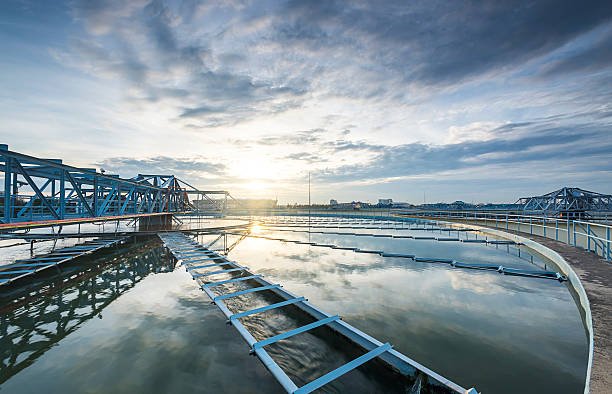
Per-capita water demand norms commonly used in India
Designers usually start from the water supply norms in the CPHEEO Manual and the National Building Code (NBC). The figures below are the typical planning values; your local authority or project brief may specify different ones, and actual consumption should always be checked where meter data exists.
| Building type | Typical water demand | Basis |
|---|---|---|
| Residential flats / housing societies | About 135 L per person per day | Per resident; often 4.5–5 persons per flat assumed |
| Offices and IT parks | About 45 L per person per day | Per employee, single shift |
| Day schools / colleges | About 45 L per person per day | Per student and staff; boarding schools much higher |
| Hotels | About 180 L per bed per day | Higher for luxury properties with laundry and spa |
| Hospitals | About 340–450 L per bed per day | Lower end for smaller hospitals, higher for larger ones |
| Restaurants / cafeterias | About 70 L per seat per day | Add to the main building load |
From water demand to sewage flow: the 80–90% rule
Not every litre of water supplied becomes sewage. Some is lost to gardening, car washing, evaporation, drinking and cooking. Standard practice in India is to take sewage generation as 80% to 90% of the water supply. Designers lean towards 90% for dense residential and hospitality buildings where almost all water goes down a drain, and towards 80% where a share of water is used outdoors.
Two further corrections matter. First, if the building recycles treated water for flushing, that flushing water still returns to the STP, so it must stay in the calculation. Second, separate any water that will never reach the sewer, such as cooling tower make-up or landscape irrigation, before applying the percentage.
- Average daily sewage (KLD) = population × per-capita demand × 0.8 to 0.9 ÷ 1,000
- Include visitors, domestic staff, security and maintenance staff at appropriate norms
- Add kitchens, laundries and clubhouses as separate line items
- Round up to the next practical plant size and allow for future occupancy
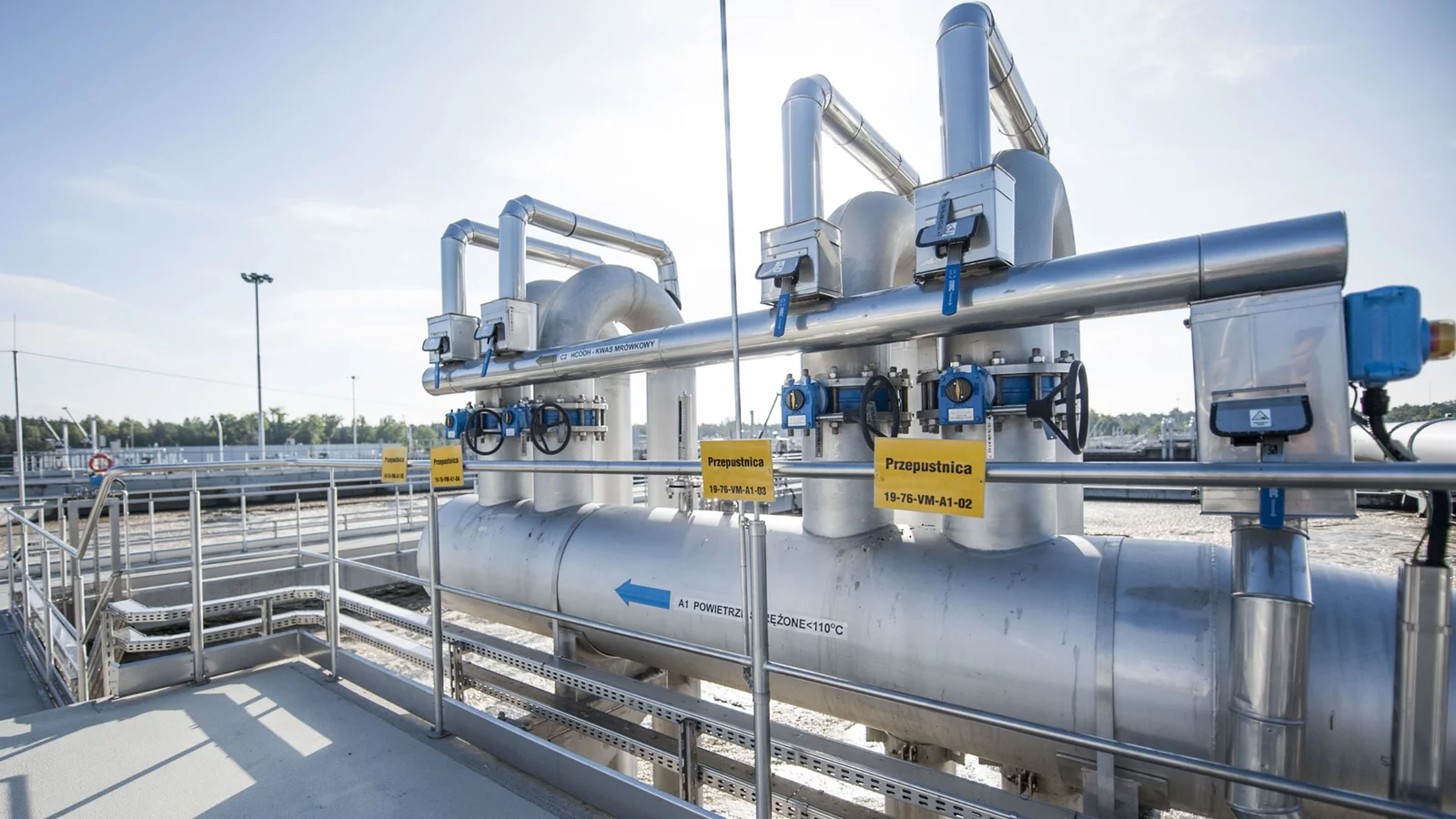
Peak factors, equalisation and the five-step sizing method
Sewage does not arrive evenly across 24 hours. Morning and evening peaks in homes, and lunch-hour peaks in offices, can be two to three times the average hourly flow. CPHEEO recommends higher peak factors for smaller populations, commonly around 3 for small communities. Pumps, screens and pipes are sized for the peak; the biological reactor is sized for the average, protected by an equalisation tank.
Count the population
List residents, employees, beds or seats by category, including staff and an allowance for visitors. Use design occupancy at full build-out, not current occupancy.
Apply water demand norms
Multiply each category by its per-capita norm and add special loads such as kitchens, laundries and clubhouses to get total daily water demand.
Convert to sewage flow
Take 80–90% of the water demand as average daily sewage in KLD. Exclude water that never reaches the sewer, such as irrigation or cooling make-up.
Apply peak factor
Divide KLD by operating hours for average hourly flow, then multiply by a peak factor of about 2–3 to size pumps, screens and the collection network.
Size equalisation and round up
Provide an equalisation tank, often 6–8 hours of average flow, then round the plant up to a practical module size with some headroom for growth.
Worked example 1: a 200-flat housing society
Assume a residential society in Gurugram with 200 flats, five persons per flat, 40 domestic and security staff, and a clubhouse with a small café. These are illustrative assumptions; your own figures will differ.
| Item | Calculation | Result |
|---|---|---|
| Residents | 200 flats × 5 persons × 135 L | 135.0 KLD water |
| Staff and security | 40 persons × 45 L | 1.8 KLD water |
| Clubhouse café | 40 seats × 70 L | 2.8 KLD water |
| Total water demand | 135.0 + 1.8 + 2.8 | 139.6 KLD |
| Average sewage flow | 139.6 × 0.85 | About 119 KLD |
| Peak hourly flow | 119 ÷ 24 h × peak factor 3 | About 15 m³/h for pumps and screens |
| Recommended plant size | Rounded up with headroom | 125 KLD, equalisation tank about 30–40 m³ |
Worked example 2: a corporate office with a cafeteria
Assume an office building with 1,000 employees in a single shift and a 200-seat cafeteria serving cooked lunches. Offices discharge most of their sewage within 10–12 hours, which makes equalisation especially important.
| Item | Calculation | Result |
|---|---|---|
| Employees | 1,000 × 45 L | 45.0 KLD water |
| Cafeteria | 200 seats × 70 L | 14.0 KLD water |
| Total water demand | 45.0 + 14.0 | 59.0 KLD |
| Average sewage flow | 59.0 × 0.85 | About 50 KLD |
| Flow during working hours | 50 KLD ÷ 12 h | About 4.2 m³/h average, peaks near 10 m³/h |
| Recommended plant size | Rounded up; oil and grease trap for kitchen | 60 KLD with equalisation sized for daytime surge |
STP capacity calculator
What size STP does your building need?
Based on water-demand norms commonly used in India, with a design margin.
Assumes about 85% of water supplied becomes sewage. An engineer will confirm peak flow and effluent quality.
Get a quote for this sizeSizing mistakes to avoid
Most problems we are asked to fix on existing plants trace back to one of these assumptions at design stage.
- Sizing for today's occupancy instead of full occupancy of the project
- Leaving out kitchens, laundries, swimming pool backwash or clubhouse loads
- Skipping the equalisation tank to save space, which overloads the reactor at peak hours
- Ignoring strong kitchen waste, which needs an oil and grease trap ahead of the STP
- Assuming lower water use than the building really consumes; check meter or tanker records where available
- Not planning space and treated-water storage for reuse in flushing, gardening or cooling
- Choosing a technology before confirming capacity, footprint and the required treated water quality
FAQs: How to Size a Sewage Treatment Plant (KLD Guide with Examples)
Straight answers to what clients ask us most. Can't find yours? Ask us directly.
Still have a question?
Talk to an engineer: +91 90734 97917 or WhatsApp us. You can also email contact@bjc-global.com.
What does KLD mean in an STP?
KLD stands for kilolitres per day. One KLD is 1,000 litres of sewage treated in 24 hours. A 100 KLD plant therefore handles about 1 lakh litres a day. Capacity is always quoted on average daily flow; pumps and screens inside the plant are separately sized for peak hourly flow, which is typically two to three times the hourly average.
How many KLD STP is needed for 100 flats?
Using about 135 litres per person per day, five persons per flat and sewage at 80–90% of water supply, 100 flats generate roughly 54–61 KLD of sewage. Add staff, clubhouse and any commercial units, then round up. Many societies of this size end up with a 60–75 KLD plant, but the exact figure depends on occupancy assumptions and local approvals.
Should I take 80% or 90% of water supply as sewage?
It depends on how water is used. Apartments, hotels and hospitals, where almost all water goes to drains, are usually designed nearer 90%. Campuses with large lawns or outdoor washing may justify 80%, provided irrigation water is metered separately. When in doubt, designers lean conservative, because an undersized plant is far costlier to fix than a slightly larger one.
Why does an STP need an equalisation tank?
Sewage arrives in surges, especially mornings and evenings in homes and during working hours in offices. An equalisation tank stores these surges and feeds the biological reactor at a steady rate. Without it, the reactor is overloaded at peak hours and starved at night, leading to poor treated water quality, odour and frequent upsets. Six to eight hours of average flow is a common sizing basis.
Does recycled flushing water change the STP size?
No, it does not reduce the STP size. Treated water reused for flushing comes back to the STP as sewage, so the plant must still treat the full flow. What recycling does reduce is fresh water demand. You will need a treated water storage tank, dual plumbing and usually tertiary filtration and disinfection so the reused water is clear and safe for its purpose.
How much space does an STP need?
Space depends on capacity, technology and whether tanks are civil, MS or FRP. Compact technologies such as MBBR and MBR need noticeably less area than extended aeration. As a rough planning step, share your capacity and the space available with us; we can suggest a layout, including underground civil tanks with only the equipment room above ground where that suits the site.
Can BJC Global check my existing STP capacity?
Yes. If your plant is overloaded or the building has expanded, we can arrange a site visit in Delhi NCR to review flow, inlet quality, tank volumes and equipment. Based on that, we recommend whether operational changes, an upgrade such as converting to MBBR media, or an additional module is the most cost-effective route. Outside NCR, we start with drawings and data.
Keep reading
STP Capacity Calculator
Estimate the sewage treatment plant capacity your building needs in KLD, and the RO capacity in LPH. Free tool from BJC…
Read more
WastewaterSewage Treatment Plant
Sewage treatment plant design, installation, upgrades and AMC in Gurugram and Delhi NCR. New STPs, retrofits and…
Read more
WastewaterSTP Plant
Compact and packaged STP plants for apartments, offices, hotels and schools in Gurugram. MBBR, SBR and MBR options from…
Read more
GuideMBBR vs SBR vs MBR: Which STP Technology Should You Choose?
Compare MBBR, SBR and MBR sewage treatment on footprint, power, water quality, skill and cost, with SAFF and extended…
Read more
Get your STP sized by an engineer
Share your flat count, occupancy or floor plans and BJC Global will confirm the right KLD capacity, technology and layout. Book a free site visit in Delhi NCR or get a free quote by email.